When clients first hear about AI product photography, they imagine robots replacing photographers. The reality is more nuanced, and more exciting.
What AI Does Well
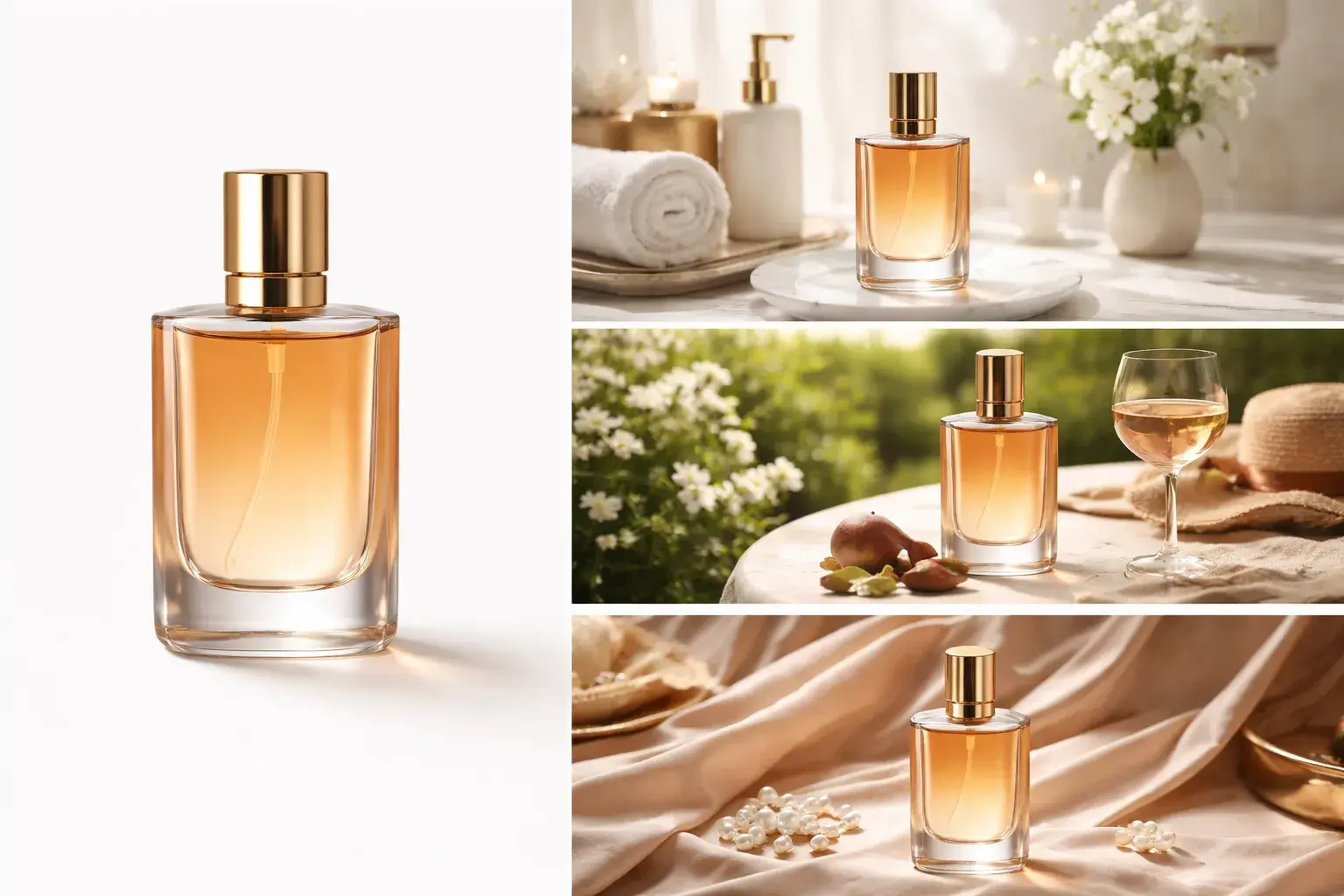
- Background generation: place products in any environment instantly
- Scene composition: lifestyle contexts, seasonal themes, editorial setups
- Lighting adjustments: relight a product shot without reshooting
- Batch variations: 20 social-ready crops from one hero shot
Drop a clean product cutout into an AI-generated environment and you get campaign-ready visuals in minutes instead of days.
What AI Doesn't Do Well (Yet)
- Capturing physical texture: the sheen of metal, the weave of fabric, the way light catches glass
- Precise product accuracy: AI can hallucinate details, add buttons, change proportions
- Color-critical work: Pantone-accurate color matching still requires controlled lighting
- Reflective surfaces: mirrors, chrome, jewelry remain challenging
These still require a real camera and a skilled photographer.
The Hybrid Approach (What We Actually Use)
Our workflow:
1. Shoot the product ONCE with high-quality studio photography
   → Clean cutouts, multiple angles, detail shots

2. Use AI to generate environments
   → Seasonal campaigns, lifestyle scenes, social variations

3. Composite product into AI scenes
   → Match lighting, add shadows, color grade

4. One photoshoot → hundreds of outputs
This gives you the accuracy of real photography with the flexibility and speed of AI.
Cost Comparison
| Approach | 20 SKUs x 3 scenes each | Timeline | |----------|------------------------|----------| | Traditional only | $15,000–25,000 | 3–4 weeks | | Hybrid (our method) | $5,000–8,000 + AI generation | 1–2 weeks | | AI only (no real photos) | $500–2,000 | 2–3 days |
The math is compelling, but the speed advantage is even more significant. Seasonal campaigns that used to require months of planning can now be produced in weeks.
Prompt Tips for Product Photography
If you're experimenting with AI product shots yourself, here are prompts that consistently produce good results:
For lifestyle context:
[Product] placed on a marble countertop, soft morning light
from left window, minimalist Scandinavian kitchen background,
editorial product photography, shot on Phase One 80mm,
shallow depth of field, warm tones
For e-commerce white background:
[Product] centered on pure white background, soft even studio
lighting, no shadows, product photography, ultra sharp focus,
8K resolution, commercial photography style
For seasonal campaigns:
[Product] arranged with autumn leaves and warm textiles,
golden hour lighting, cozy atmosphere, overhead flat lay
composition, editorial style, soft shadows
When to Use What
Use AI-only when:
- Speed matters more than perfection
- The product is simple/geometric
- You need concept mockups before manufacturing
- Social media content at high volume
Use hybrid when:
- Product accuracy is critical
- You're building a brand's primary visual library
- The product has complex materials (glass, fabric, metal)
- Color accuracy matters (fashion, cosmetics)
Use traditional only when:
- Legal/regulatory compliance requires real photography
- Ultra-premium positioning demands tangible authenticity
- The product has never been manufactured yet (prototypes need real photos to verify)
The future isn't AI replacing photographers. It's AI multiplying what a single photoshoot can produce.